Connecting Children with Conservation Through Environmental Education
https://www.nwfecoleaders.org/projects/home/242?utm_campaign=website&utm_medium=email&utm_source=www.nwfecoleaders.org
If other:
https://turtleyyours.com/education/
1. Where is the biggest impact of this project?
State
If other:
2. What were the goals for your project?
Connecting Children with Conservation Through Environmental Education is an ongoing initiative designed to help children and families build meaningful connections with wildlife and the natural world through storytelling, accessible environmental education, and hands-on learning experiences.
3. What strategy did you use?
Communications/Marketing, Education
If other:
4. Did you accomplish the goals you set for this project? Please explain.
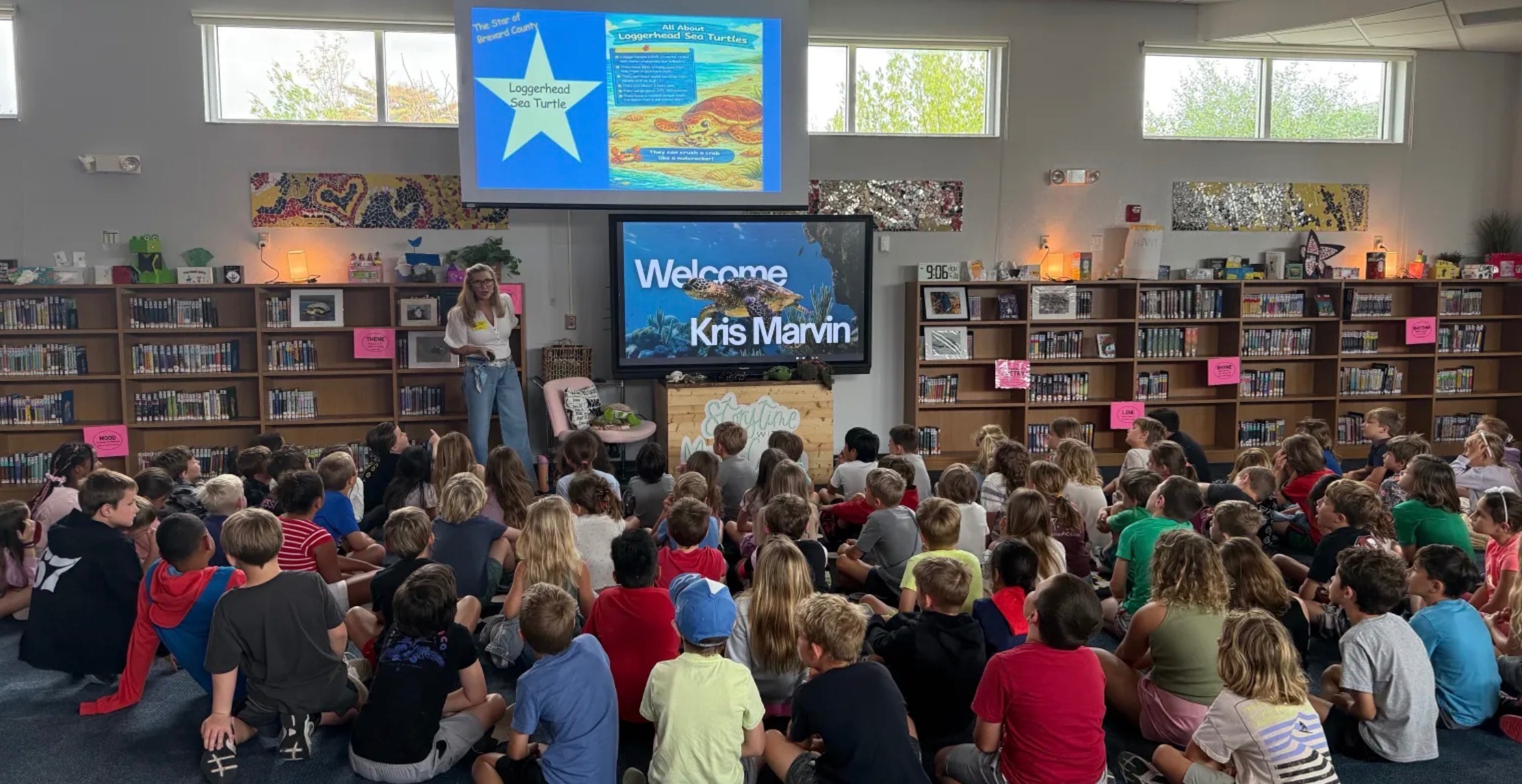
Yes. While this is an ongoing project, I have accomplished many of the initial goals and established a strong foundation for continued growth. I have written and published four conservation-themed children’s books, including a 2026 Nature Generation Green Book Award Long List Honoree, and created a website that serves as an educational hub with free lesson plans and resources. I have published eight educational blog posts and created five original Ocean Encounter educational videos. I have also reached more than 900 elementary students through free author and environmental education presentations and am scheduling additional school visits for the 2026–27 school year. A successful free community outreach event was held in February 2026, with additional programming planned. The next phase includes expanding standards alignment, developing additional educational resources and programs, and completing the process of establishing Turtley Yours as a 501(c)(3) nonprofit organization.
5. Choose your impact measure type.
Other
What were the measurable outcomes of your project?
The project has produced measurable educational and community impact. To date, I have reached more than 900 elementary students through free author visits and environmental education presentations. I have written and published four conservation-themed children’s books, including one recognized as a 2026 Nature Generation Green Book Award Long List Honoree. Proceeds from all four books have been donated to coastal conservation efforts.
I have developed and made available free downloadable lesson plans and educational resources, currently aligned with Florida B.E.S.T. and Florida Science Standards. The project website serves as an educational hub and currently includes eight original educational blog posts and five original Ocean Encounter videos, each designed to encourage observation, curiosity, and learning.
The project has also included a successful free community outreach event, with another event in development. An online request system has been established for schools, libraries, homeschool groups, and other organizations seeking author visits and educational programs.
For the 2026–27 school year, author visits are already being planned in Texas, Florida, and Ohio, with anticipated programming for students in grades 1–5.
The project continues to grow, so these outcomes represent a baseline rather than an endpoint. Future impact will be tracked through students reached, presentations delivered, educational resources developed and used, participating schools and organizations, community programs, and engagement with online educational content.
6. When did you begin and complete your project?
The project began in August 2025 with the publication of my first conservation-themed children’s book and is ongoing. Since then, it has expanded from conservation storytelling into a broader environmental education initiative that includes four published children’s books, free lesson plans and educational resources, school presentations, original educational videos and articles, and community outreach.
In 2026, the project expanded further with the development of the Turtley Yours educational website and additional programming and resources. Turtley Yours is now in the process of pursuing 501(c)(3) nonprofit status to support the project’s continued growth and accessibility.
Because environmental education and community engagement are ongoing goals, the project does not have a fixed completion date. For purposes of this certification, the outcomes reported represent the project’s first year of work, from August 2025 through August 2026.
7. What was challenging about your project and how did you respond?
One challenge has been building a high-quality environmental education project while keeping resources and programs free and accessible.
The project has been self-funded thus far, requiring me to develop much of the content myself while working toward 501(c)(3) status for long-term sustainability. Media has also been challenging due to permissions, licensing, cost, and availability. I photograph and film most of my own content, which has required patience, an adventurous spirit, and plenty of time in the field. When I cannot capture something myself, I purchase appropriate licensing.
Scientific accuracy is equally important. I research content carefully and seek additional review from qualified subject-matter experts, including marine biologists and sea turtle researchers I have connected with through my volunteer conservation work. This additional fact-checking helps ensure materials are engaging, current, and scientifically sound.
8. Which groups were involved in this project? Students, faculty, staff or community groups?
The project has involved elementary students, educators, schools, families, community members, conservation professionals, and conservation organizations. More than 900 elementary students have participated in free author visits and environmental education presentations. Teachers and schools have helped provide opportunities to bring conservation education directly into classrooms, while educators can access free lesson plans and other resources through the Turtley Yours website.
My volunteer work in sea turtle conservation has also connected me with marine biologists, researchers, and other subject-matter experts whom I can consult when additional scientific review is needed. Community members have participated through free outreach events, and relationships with conservation organizations have helped inform the project’s educational focus.
The next phase will expand participation through additional schools, libraries, homeschoolers, conservation orgsnizations, & community groups.
9. Was your project funded? If so, how?
The project has been self-funded to date. I have personally covered the costs of book development and publishing, website development and hosting, educational materials, media and licensing, travel, community outreach events, and other project expenses so that educational resources, author visits, and community programming can be offered free whenever possible.
Proceeds from book sales have been donated to coastal conservation organizations and initiatives rather than used to fund the project.
To make the project sustainable and expand its reach, I am currently working to establish Turtley Yours as a 501(c)(3) nonprofit organization. This will create opportunities to pursue grants, charitable donations, sponsorships, and partnerships to support future educational programming while keeping resources accessible to children, families, and educators.
10. How did you communicate about this project and educate the broader campus and/or community?
I have promoted the project through community events, conservation partnerships, social media, school outreach, local business partnerships, and grassroots networking. I sponsored the Turtle Krawl 5K and Save the Manatee 5K, where sponsorship tents allowed me to talk directly with community members about Turtley Yours, conservation issues, and my books. I also support REEF and SEE Turtles and sponsored the 2026 and 2027 FWC Marine Turtle Permit Holder Meetings. I share educational content and project updates through Facebook and Instagram and boost posts when funding allows. A local coffee shop carries my books and helps introduce the project to the community. I have contacted schools directly and used personal networks to arrange free in-person and virtual author/conservation presentations in Florida, Texas, and Ohio. I also host free community events and distribute stickers and business cards with a QR code directing families and educators to the website.
11. How have you evaluated your project?
Individual reflection, Other
If other, please describe:
I evaluate the project through ongoing reflection, feedback from educators and participants, engagement with educational content, and review of materials by qualified subject-matter experts when appropriate. I also track tangible outcomes such as students reached, presentations delivered, resources created, community participation, and requests for future programs.
12. What did you do after your reviewed your project?
Communicated your project results through a blog or other media, Added new team members with different expertise, Other
If other, please describe:
Based on what I learned during the project’s first year, I expanded its scope beyond conservation-themed books to include free lesson plans and educational resources, original videos and articles, school presentations, community programming, and broader educator outreach. I am also working toward 501(c)(3) status and building a board with diverse expertise to help guide the project’s next phase.
13. What was the biggest or best thing you learned from your project?
The biggest thing I have learned through this project is how naturally children respond to conservation when it begins with wonder rather than fear. Through author visits, presentations, community events, and conversations with children, I have seen their curiosity come alive when they encounter an animal, hear its story, or discover something about nature they did not know before.
Those experiences have reinforced something I believed when I began: conservation starts with wonder. Wonder leads to curiosity, curiosity leads to understanding, understanding leads to appreciation, and appreciation leads to protection.
I have learned that we do not have to begin conservation education by overwhelming children with frightening facts and statistics about the future. If children grow up knowing, appreciating, and feeling connected to the natural world, caring for it can become part of who they are. Protecting the environment will not be something we have to persuade them to do as adults.
14. What advice would you give to others working on a similar project?
Start with what you have and don’t wait until everything is perfect. I began with an idea and a desire to help children connect with conservation, and the project grew as I learned what educators, children, and communities responded to and needed. Be willing to learn new skills, ask questions, seek out people with expertise you don’t have, and change direction when something isn’t working.
I would also encourage others not to underestimate the value of relationships. Teachers, conservation professionals, community businesses, volunteers, family, and friends can open doors, offer knowledge, and connect you with opportunities you never anticipated.
Most importantly, stay focused on why you started. There will always be more dollars needed, more content to create, and things you wish you could do better. Don’t let that keep you from doing what you can today. Small efforts build on one another, and you may be surprised by how far an idea can grow.
15. Based on your response above, what are your future plans for this project? And are there resources (people, financial, etc.) available to sustain it?
My immediate goal is to complete the process of establishing Turtley Yours as a 501(c)(3) nonprofit and build the organizational and financial foundation needed for sustainable growth. I have assembled a board with diverse experience in education, conservation science, nonprofit work, and business.
I plan to expand free educational resources, align materials with NGSS and relevant ELA/literacy standards in addition to Florida standards, create more original videos and conservation content, and reach more children through free school and library presentations, community events, and virtual programming. I am also developing two additional conservation-themed children’s books and hope to build partnerships with educators and conservation professionals who can provide feedback and subject-matter expertise.
Longer term, I hope to develop Conservation Scouts, a program inspired by the badge-based learning of scouting programs but focused specifically on conservation. Children could earn badges such as Sea Turtle Guardian, Shorebird Protector, Native Plant Gardener, Marine Debris Detective, Pollinator Protector, and Mangrove Guardian by learning about wildlife and completing meaningful conservation activities.
The project remains self-funded, so financial resources are limited. Nonprofit status will allow me to pursue grants, donations, sponsorships to keep educational resources and programming free. My goal is to build the project thoughtfully so it can have a lasting impact.
Category ARCHIVED | PROJECT CERTIFICATION
Form Details
Average Rating:
Date Added: Aug 9, 2026
Date Last Modified: Sep 2, 2026



Project Feedback